
Not because I kept it secret. I just felt no one would understand.
Picture this: a businesswoman with a PhD, running a successful company in a ruthless business world, keynote speaker from the US to Singapore, on the Forbes list, named one of the 100 best female entrepreneurs in Europe — and her secret is… meditation?
I know how that sounds. I can see that smile — polite, slightly condescending. “Right, Gaga… okay.”
But I’ll tell you this: before every major leap in my career, there was deep inner work. Before every important decision, before every turning point, before every “how did she pull that off” you may have thought after I did something — silence. The kind of silence most business people never experience, because they think they don’t have time for it. Or that it’s not for them.
I’m sharing this now because the time is right. Because I’m sure it can help others. And because there’s too much evidence for us to ignore this practice. If anyone thinks it’s not serious, they can look at what I’ve achieved. Only someone unserious themselves could call unserious the thing that got me here. But to be honest, even that doesn’t matter to me anymore. All that matters is passing on what works.
To master it, I first had to understand it
I’m a nerd. I say that with pride.
When I first heard about meditation, I wasn’t impressed or thrilled. I was curious. But also skeptical.
And then I tried it. And it was hell trying to quiet my mind. The head won’t stop working. Thoughts jump around. The body fidgets. And you think: this isn’t for me. Maybe for someone who has time to sit in lotus pose on a Himalayan peak. Not for a woman who has a presentation in three hours and before that needs to drop the kids off at school and practice, stop by the post office, and blow-dry her hair.
But I was persistent. Because I sensed there was something there.
I approached it the way I approach everything — like a student. The only way I know how. For me to master something, I first need to understand it. Timeline Healing to master level. Transcendental Meditation. Energy medicine. Integrative meditative technique. Ten years of learning and practice. I took notes as if I were preparing for a second PhD: breaking down concepts, looking for the logic behind every step, digging through scientific papers, reading hundreds of documents and studies, turning things inside out, poking, challenging, and assembling conclusions. I created an internal notebook of over a hundred pages to break down every concept I’d learned, every law behind it, every study that confirmed it — and every one that challenged it.
And then the breakthrough happened.
One of my teachers explained the difference between three states. The first: actor — you react to the world. Someone irritates you, you fire back and burn inside. A crisis hits, you put out fires. You live in reaction.
The second state is observer — you watch yourself reacting. You see that you’re angry, but you understand why, and you’re not fundamentally shaken. You see the pattern. You stand one step above the scene of your own movie.
The third is creator — you realize you are both the creation and the creator at the same time. You’re not just an actor in a movie someone else is directing. You’re not the audience either. You are the movie and the director. The camera and the light. You are everything. And that changed everything for me.
Today I meditate even when I’m not meditating. Like flipping a switch, I enter a state of inner peace. It took a decade to reach this place. But every minute was worth it.
What I found while digging
When I talk about meditation, people often think of crystals and sage. I think of Einstein.
What many treat as mysticism is actually metaphysics. And that word is beautiful when you break it down. Meta-physics. Physics beyond physics. Physics that encompasses the physical but goes further. And that’s precisely the greatest power of the metaphysical: it IS grounded in physics.
But I know what questions this topic raises. I’ve heard them a hundred times and asked them all myself. Let’s go through them one by one.
How can I believe in something I can’t see?
This was my first question. Perfectly rational. And I think it’s a valid one. But let’s break it down and reassemble it.
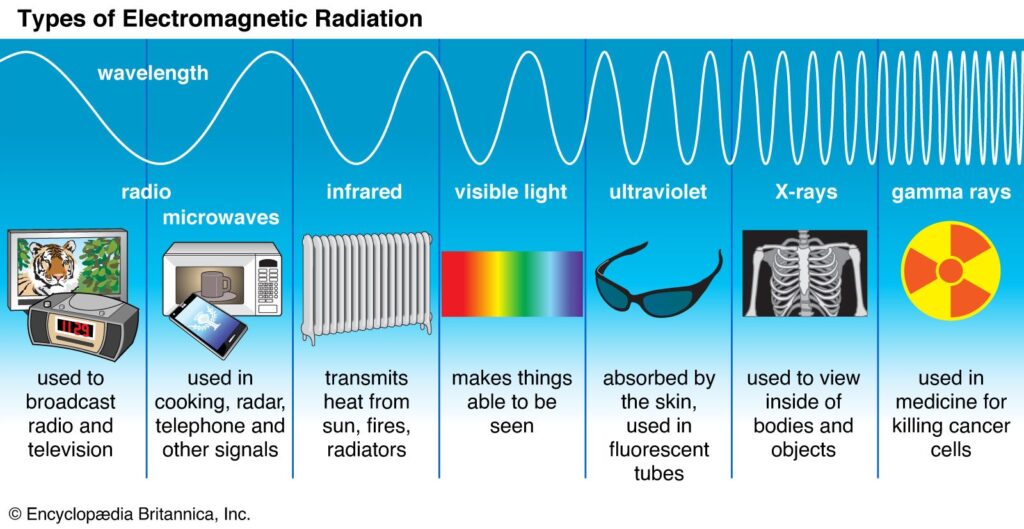
The human eye registers light in the range of 380 to 700 nanometers — that’s what we call the visible spectrum (Newton, 1704, Opticks). But above that range are ultraviolet rays, X-rays, gamma rays. Below it are infrared radiation, microwaves, radio waves. All of that exists around you, right now, as you read these lines. You can’t see any of it. But you’d hardly say it doesn’t exist.
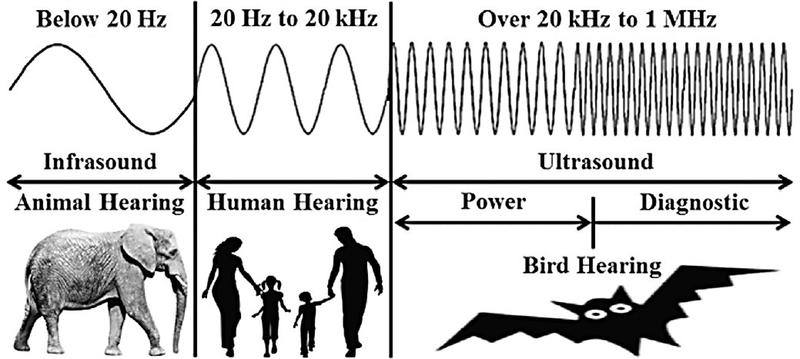
The same goes for sound. You hear frequencies from 20 to 20,000 hertz. A dog hears up to 65,000. A dolphin up to 150,000. We use ultrasound to see babies in the womb — so with a sound we can’t hear, we see a life we haven’t yet met. An entire parallel world is happening beyond the reach of our senses.
And consider this. Love. You can’t see it. You can’t weigh it on a scale. You won’t find it under a microscope. But can anyone deny it exists? Fear. You can’t see it. But you feel it in every cell of your body. A thought. It has no color, no sound, no weight — but it changes decisions, changes relationships, changes careers, changes lives.
Just because we can’t see something doesn’t mean it doesn’t exist. Just because we don’t understand something doesn’t mean it isn’t real. And I mean that — really.
Okay, but the energy talk is… vague. Where’s the substance?
I wondered the same thing. Until I broke it down.
One special theory gave us in 1905 the most famous formula in the world: E = mc². Mass and energy are the same thing. Literally. The chair you’re sitting on is energy. The screen you’re looking at is energy. Your body is energy. Everything in the universe is energy in different forms and states. Everything is E.
And that includes your thoughts. The brain uses twenty percent of your body’s total energy while running on just twenty watts — like a small light bulb (Raichle and Gusnard, 2002, “Appraising the brain’s energy budget,” Proceedings of the National Academy of Sciences). That little bulb in our heads is ten times more energy-demanding per gram than muscle. Every thought you have is an electrical impulse, an electrochemical signal traveling through nerve fibers at up to 120 meters per second. Every thought consumes energy, redirects energy, transforms energy.
In physics, energy and work are measured in the same unit: the joule. Energy is the capacity to perform work. Same thing, two sides of the same coin. A thought becomes a decision, a decision becomes action, action becomes work that produces results. Which means:
Thought = Energy = Work.
Almost like poetry. Maybe even more beautiful.
The law of conservation of energy (the first law of thermodynamics) says this energy can neither be created nor destroyed. It only changes form. Heat becomes work. Light becomes chemical energy in a leaf. And your thought — that seemingly insignificant, invisible thought — always becomes something. The only question is: what?
Energy isn’t some vague story. Energy is the hardest fact physics knows.
But I’m already doing the best I can. Isn’t it enough to just work harder and get everything in order?
For a long time, I thought it was. I convinced myself otherwise.
Yes, work is crucial. Entropy (the second law of thermodynamics) says that disorder in every system always increases. Without energy input, everything falls apart. A child’s room won’t clean itself. Ice melts. Sound dissipates into silence. And the mind, left to its own devices, becomes an arena of worries, fears, and mental noise. I’ve been telling my clients for years: only WORK maintains ORDER. Non-work creates disorder. It’s true for companies, for marriages, for bodies… and for our minds. I’ve written about this too.
Here’s the trap! When you sit in your office anxiously thinking about what a client will say, that thought uses the same energy as a thought about solving the problem. Fear burns the same joule as creativity. Worrying about the past uses the same resource as planning for the future. Your mind doesn’t distinguish — it just burns. And you (don’t) choose what it burns on.
So it’s not enough to work. What matters is how you work. And how you work depends on your thoughts. Because thoughts are what direct your energy toward solutions or toward problems, toward order or toward chaos, toward growth or toward stagnation.
What you do frequently becomes your frequency. Frequently worry? Frequently complain? Your body and mind calibrate to that vibration. Frequently work on yourself, air out your thoughts, maintain inner peace and clarity? Then that becomes your default state. Your new nature.
That’s why you don’t just need more work. You need conscious calibration. Calibration means adjusting an instrument to a specific standard. Your mind is the instrument. Meditation tunes it to the right frequency for you. There’s no magic or vagueness here. It’s pure physics.
Can this actually be proven?
That was my last question. The most stubborn one. And the answer is: yes. It’s already been proven. And that’s exactly the conclusion I reached in my decade-long investigation.
I could stay in the realm of physics and philosophy. But here’s evidence from the laboratory.
A study published just days ago in the journal Neuroscience of Consciousness (Pascarella et al., Italian National Research Council in collaboration with the University of Montreal) examined how meditation changes brain activity in monks with an average of 15,000 hours of meditative practice. They used technology that measures the brain’s magnetic fields and machine learning for data analysis.
Meditation doesn’t rest the brain. It reshapes it.
During meditation, the brain reaches a state scientists call brain criticality — an optimal balance between chaos and order. Think of it this way: your brain is an orchestra. In chaos, every musician plays whatever they want. In excessive order, everyone plays the same note. But at that point of perfect balance — a symphony emerges. Enough structure for the music to have meaning, enough freedom for it to be alive. Karim Jerbi, a neurologist at the University of Montreal and co-author of the study, explains: in that state, the brain is stable enough to reliably process information, yet flexible enough to quickly adapt to new situations.
Here’s the finding that hit me the hardest. In the most experienced monks, the difference between brain states during meditation and during ordinary rest had virtually disappeared. Their brain at rest already functions like a brain in meditation.
When I read that sentence, I got chills. Because that’s exactly what I live. I meditate even when I’m not meditating. Like flipping a switch. Science proved and put into words what I’d felt in my body after years of practice.
And that’s not all. A meta-analysis of 163 studies on different types of meditation (Sedlmeier et al., 2012, Psychological Bulletin) showed statistically significant effects on reducing anxiety, stress, and negative emotions, while increasing positive emotions and quality of life. Harvard researchers (Lazar et al., 2005, NeuroReport) found that meditative practice leads to measurable increases in gray matter density in the prefrontal cortex — the part of the brain responsible for decision-making, attention, and emotional regulation. Hölzel and her team at Harvard (2011, Psychiatry Research: Neuroimaging) confirmed that just eight weeks of meditative practice changes the structure of the brain.
Research on Transcendental Meditation in particular has shown a connection between regular practice and increased brainwave coherence in business professionals, which is directly linked to better decision-making, greater creativity, and stress resilience. Ray Dalio, founder of the world’s largest hedge fund (and author of the renowned book Principles), says TM is “the single biggest positive influence” on his life and that he’s built meditation principles into the company’s culture.
Numerous corporations are putting these findings into practice. Salesforce built a meditation room on every floor of its San Francisco headquarters. Google designed the “Search Inside Yourself” program, which thousands of employees have completed. Apple allows employees thirty minutes a day for meditation. Goldman Sachs, General Mills, Bank of America — all have launched similar programs. I don’t know if you were aware of this, but I consider it a serious indicator of how much successful people view meditation as practical.
Measurements. MRI scans. Statistics. Control groups. And companies that recognized this works. But even if it didn’t — what harm could a little inner peace do?
And where is peace?
In my development toolkit, I wrote a sentence that may be the most important of all I’ve ever written:
“Peace is within you. Not outside you. No one can take it from you and no one can give it to you.”
Replace the word peace with happiness. With success. With focus. With clarity. It still holds.
Business people rely too much on what’s outside. On other people’s inputs, knowledge, experiences, opinions. On new strategies, new tools, new trends. They invest in MBA programs, in consultants, in productivity software, in business conferences — and all of that has value.
But what about all of it? Everything we pick up from the outside, our thoughts will turn into work. And what kind of work that will be depends on who we are and how we think. When we’re in order on the inside, then we know how to put the outside in order too: to make something good from everything we’ve learned, to bring order to the chaos of life and work.
We are the measure of the world. The beginning and the end of everything. And we are the last place we look.
What actually changes
There is too much scientific evidence, too many personal experiences, and too many practical results for us to ignore this practice. I’m not saying meditation is the only answer. I know it’s not. I’m saying it’s a serious, proven, valuable tool that most business people have either never tried or tried the wrong way and gave up too quickly.
And it doesn’t matter what you call it. Meditation. Contemplation. Prayer. Stillness. The name doesn’t matter. What matters is the act: the practice of consciously directing your thoughts and attention — and therefore your energy — toward what is good for you.
I started by recording meditations for myself. I wasn’t disciplined enough to meditate on my own without guidance — I needed a voice to lead me.
And then, accidentally and somewhat shyly, I shared some of those recordings with my mentees. They were facing challenges I’d gone through myself, and these techniques had been invaluable to me. I expected a polite nod. What I got was enthusiasm. “Gaga, this changed my morning.” “I played this before a meeting and I was a different person.” “Do you have more?”
Today, when I talk with people who’ve started using them, I hear the same things over and over. Their minds ran nonstop, day and night, like a machine with no off switch. And then they learned to reset in just a few minutes. Not tomorrow. Not on vacation. Now, today, before the next meeting.
They used to make decisions under pressure, in a rush. And then they discovered there’s a pause between an event and a reaction — and that wisdom lives in that pause.
Their focus was like scattered light. And then they learned to gather it into a single powerful point.
They thought meditation was for yogis and hippies, not for business people. And then they realized it’s a tool like any other: practical, concrete, effective.
I’ve experienced all of this myself — I’ve been through the entire process. It works for many, it works for me, it works for my people — I wish it would work for everyone.
***
I’m currently preparing the first business meditation channel in the region. Short audio exercises, three to fifteen minutes long, for specific business situations. Three minutes before an important meeting to calm and center yourself. Five minutes after a stressful call to reset your nervous system. Ten minutes on the weekend to clear the week behind you and recharge for the new one. A practical tool you can use in your car before a presentation or during your lunch break.
A little of my energy, thoughtfully channeled into work that brings order to our demanding lives.
More soon.
 2020
2020
Comments